
Read time: 5 minutes.
Before lung cancer entered her life, 24-year-old Camila Bermudez Garcia was focused on building her future. Growing up as the oldest of three in Ponce, Puerto Rico, she was surrounded by a close-knit family and immersed herself in music, science, and community service. She played the viola in an orchestra, sang and played piano in church, and was preparing to apply to medical school after earning a Master’s in Medical Sciences.
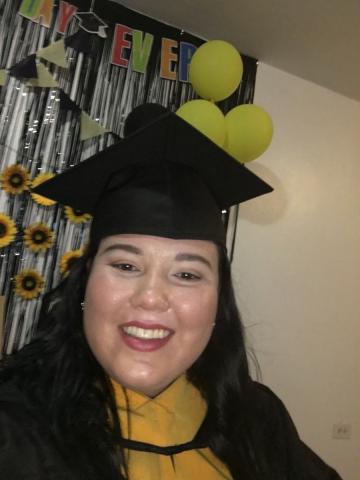
Her interest in healthcare began years earlier after her brother went through a long diagnostic process before ultimately being diagnosed with autism. Witnessing his journey inspired her to pursue medicine and help others navigate difficult diagnoses. She felt like she was in the middle of one of the most exciting chapters of her life. Cancer was the furthest thing from her mind.
Searching For Answers
The first sign that something was wrong came while Camila was volunteering at a COVID vaccine clinic. “I just randomly coughed up blood, like a spoonful of blood, and that’s what changed everything for me,” she said. She assumed it was minor, as did the healthcare providers she went to. Instead, she spent nearly a year navigating appointments, scans, antibiotics, and growing uncertainty.
An X-ray showed an abnormality in her lung, but she was still repeatedly told she had pneumonia. As symptoms persisted, she was prescribed antibiotic after antibiotic, and her health further declined. “I knew it wasn’t normal to cough up blood,” Camila said.
Even after undergoing a PET scan that showed concerning findings, she still struggled to get the answers she needed. Her mother pushed for additional testing, advocating for her when she felt her concerns were being dismissed. “We ended up paying out of pocket with a credit card,” Camila remembers. Looking back, Camila believes her age influenced how her symptoms were perceived and contributed to a diagnosis that took a year to receive.
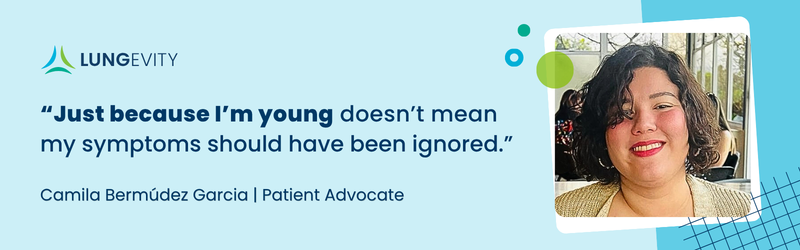
"Just because I’m young doesn’t mean my symptoms should have been ignored."
Becoming the Patient
Camila had spent years preparing for a career in medicine. Now, after a year of unanswered questions, she found herself facing a diagnosis of her own.
She underwent surgery to remove what doctors believed was an area of her lung that had been damaged by infection. During the procedure, a pathologist examined tissue from the lung and found cancer. Testing later confirmed Stage IIB non-small cell lung cancer with a KRAS G12V biomarker. The diagnosis stunned both her family and her medical team. Her surgeon had told her before the procedure that there was a 99.9% chance it wasn’t cancer. “I had zero background or zero idea of what I was going to face,” she said.
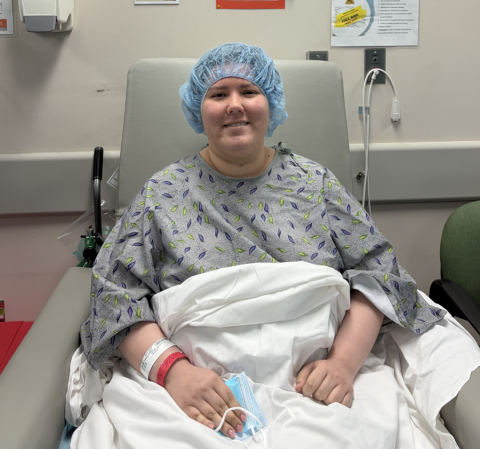
As she began learning more about her diagnosis, she often heard the same thing from her care team: her case was rare. One doctor even referred to her as a “unicorn.” Rather than letting the label define her, she chose to embrace it. During a later hospital stay, her family decorated her room with unicorn-themed decorations and a Christmas tree covered in unicorn ornaments. “I used it as a symbol of strength,” she said.
Her previous medical training provided a medical foundation, but she had to teach herself how to read pathology reports, understand biomarker testing, and advocate for her care. Instead of studying patient experiences, she was living one.
"I started to see the patient’s side."
From Patient to Advocate
While searching for information and support, Camila began connecting with other patients online through social media, advocacy organizations, and patient communities. For the first time, she saw people living full lives after diagnosis. “I felt like I belonged,” she says.
Camila found strength in the people around her through every challenge. Her family was her constant source of support, helping her navigate appointments, treatments, and decisions. It was during this time that Camila became aware of the lack of support available for young adults with lung cancer near her Puerto Rico home. The more she learned about what other patients around her were experiencing, the more she realized how many were facing similar barriers to care and support.
She often felt invisible within a system that wasn’t designed for young adult patients like her. The isolation reinforced her belief that patients needed stronger support networks and community connections. She began sharing her story publicly through patient organizations, interviews, and podcasts. She hopes that by telling her story, she will help patients feel less alone and bring more attention to the gaps in support and resources that still exist.
"Just because your space doesn’t exist, it doesn’t mean you can’t create it."
Life Beyond a Diagnosis
Cancer affected far more than Camila’s health. Treatment put medical school plans on hold and forced her to confront uncertainty about the future she had worked so hard to build. She also faced misconceptions about what a cancer patient should look like.
Because she did not lose her hair and often appeared healthy on the outside, people sometimes struggled to understand the reality of what she was experiencing. Meanwhile, she was working to maintain the goals, hobbies, and identity that mattered to her. Therapy became an important part of her journey, helping her process the emotional impact of cancer and build tools for moving forward.
Today, Camila is using her voice to advocate for greater awareness and support for people affected by lung cancer in Puerto Rico, where she believes patients still face significant barriers to care, resources, and community support.
"I am more than my diagnosis."
Looking Ahead
Camila is currently preparing to apply to medical school, determined to continue pursuing the future she saw for herself before her diagnosis. She believes her experiences as both a patient and a future physician have given her a perspective that can help others. “I am more than my diagnosis,” she said.
While her path may look different from what she once imagined, she remains focused on creating meaningful change, building community, and helping others feel less alone. “My life wasn’t going to end. It was just starting.”
Resources:
- If you have a known biomarker, make sure to check out the LUNGevity Patient Gateways to see the latest news that's relevant to you.
- If you're unsure of your biomarker status, you can learn more about comprehensive biomarker testing here.
If you're interested in sharing your story like Camila, please fill out this form to get in contact with us.