
Read time: 1 minute.
National Cancer Control Plans are meant to guide cancer prevention, diagnosis, treatment, and survivorship priorities for a country. But too often, lung cancer is not included in the funding and implementation of NCCPs. In an education session presented at the 2026 World Conference of Lung Cancer in Seoul, South Korea, Dr. Upal Basu Roy of LUNGevity Foundation offered case studies and a framework for building stronger partnerships that can impact national policies for people diagnosed with lung cancer.
Key findings included:
Among 142 countries with available cancer plans…
- 57 include lung cancer.
- 40 include lung cancer early detection.
- 4 include funding for lung cancer early detection.
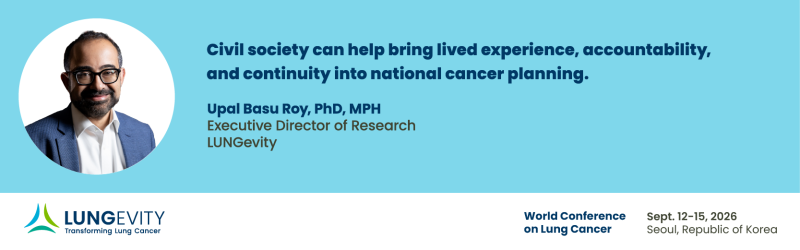
“Civil society can help bring lived experience, accountability, and continuity into national cancer planning,” said Dr. Basu Roy. “When advocates, navigators, and clinicians work together, national policies have the potential to make large-scale improvements for patients.”
Takeaways and next steps: Advocates can bring three clear asks into planning conversations: name civil society and patient representatives as implementation stakeholders, include navigation funding in implementation plans, and use meaningful engagement models from drafting and implementation to monitoring.
Want to learn more about how you can get involved in lung cancer policies at the national level? Email Upal Basu Roy, PhD, MPH, LUNGevity’s Executive Director of Research at [email protected].