
Read time: 4 minutes.
Executive Summary
Most lung cancers are found after the disease has spread, when treatment is harder and outcomes are worse. Shifting to earlier lung cancer diagnoses requires a multi-faceted approach. We need to improve: who qualifies for screening, people’s ability to access and complete annual lung cancer screenings, how track findings and follow-ups from lung cancer screenings, and how policies and payment shape care.
LUNGevity is leading the Early Lung Cancer Center (ELCC), a multistakeholder collaborative, that combines our research expertise, patient advocacy, and public policy with the strengths of clinicians, industry, and others. By building practical, evidence-based solutions that anticipate real world roadblocks, the ELCC is accelerating progress toward earlier detection and more lives saved.
Early detection is a proven way to reduce lung cancer deaths, yet today, too many people never get the chance to detect lung cancer early when it is most likely to be cured. Of the more than 234,000 people diagnosed with lung cancer annually, roughly half are ineligible for screening under current US Preventive Services Task Force criteria. Among those who do qualify for lung cancer screening, approximately 85% will not participate.
The US Preventive Services Task Force suggests annual lung cancer screenings for adults who:
- Are between 50-80 years old, and
- Have a 20 pack-year smoking history, and
- Currently smoke or have quit within the past 15 years, and
- Have no symptoms of lung cancer (asymptomatic)
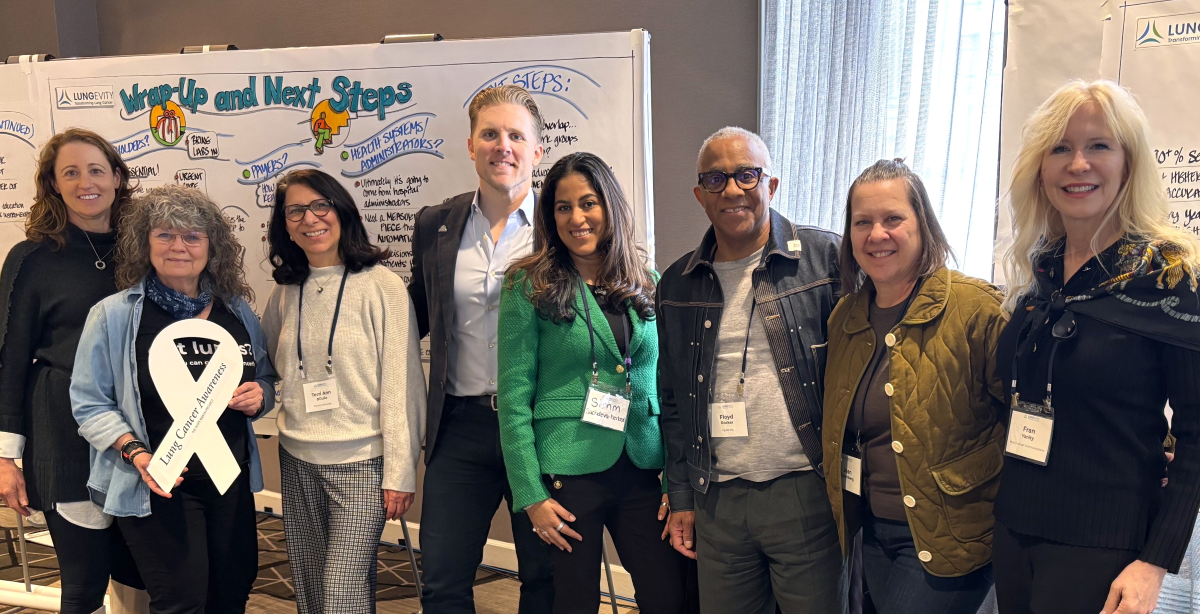
To accelerate solutions, LUNGevity convened our annual Early Lung Cancer Center (ELCC) multistakeholder meeting on March 12-13 in Washington, DC. Attendees included clinicians, researchers, patients/survivors, representatives from diagnostic and pharmaceutical companies, as well as members of the advocacy and policy communities. This meeting, led by Leah Fine, MBA, LUNGevity’s vice president of the Early Lung Cancer Center, covered several topics that are poised to improve real-world healthcare delivery, adoption, and follow-through to increase the likelihood of detecting lung cancer in the early stages of disease.
No Nodule Left Behind
Lung nodules are frequently noted as incidental findings on chest images, but more than half of incidentally detected pulmonary nodules are not appropriately followed up, which can delay diagnosis.
ELCC meeting participants discussed how incidental pulmonary nodule programs can improve follow-up care through clearer ownership, consistent tracking, and reliable patient navigation. LUNGevity is advancing this work through its “No Nodule Left Behind” working group, which presented a case study report featuring five clinical sites and three patient stories to help health systems establish or strengthen programs that connect findings to timely evaluation. Fine emphasized the importance of reliable processes, saying, “A pulmonary nodule finding should trigger a clear next step in all medical settings.”
Chest Health Check
Older adults, especially those age 50 and above, face elevated risks of both lung cancer and cardiovascular disease, creating a compelling opportunity for integrated thoracic imaging that supports both lung and cardiac health. In some settings, cardiac imaging also reveals incidental lung nodules, and estimates suggest that about 10%-30% of incidentally discovered lung nodules originate from cardiac imaging.
At the ELCC meeting, stakeholders explored the evidence, workflow design, and referral pathways that are needed to move a “chest health check” concept into standard practice, including how to reduce missed opportunities while protecting patients from unnecessary testing and ensuring appropriate follow-up. Fine noted that practical integration matters, stating, “Our goal is connected care that makes it easier for people to do one chest health appointment to check the vital organs in that area.”
Blood Tests for Lung Cancer
Blood based tests are evolving quickly across the lung cancer continuum, including potential roles in early detection, diagnostic clarification, treatment selection, and monitoring. These technological advances are exciting and they underscore the need to develop frameworks and standards to guide the responsible use of new tools.
ELCC meeting participants analyzed four population segments for which early detection blood tests could be used and discussed the need to define clinical utility, appropriate use criteria, and implementation requirements so that emerging tools are adopted responsibly and deliver real benefits to people. This analysis and discussion are important as they can lead to greater clarity for both patients and clinicians about the value and risk-benefit trade-offs these tests may offer for certain population segments.
Patient Input & Representation
Patients and survivors of early-stage disease are at the heart of the ELCC. As our efforts lead to broader stage-shifting, more patients will have lung cancer detected, diagnosed, and treated early. Understanding the patient journey and their unmet needs helps LUNGevity more effectively support this growing community, provide resources, and influence clinical practice. During the past year, the ELCC has been actively working to engage directly with this community and partnered with Health Advances, a healthcare strategy firm, to map the early-stage journey and identify points where patients need clearer education, faster navigation, and stronger support.
In addition, a patient panel at the ELCC meeting provided firsthand accounts that described detection, diagnosis and treatment barriers, daily life logistics, and psychosocial needs. Fine underscored why this representation is essential, stating, “Listening to patients speak directly about their experiences and about how they feel throughout the process is absolutely key to our approach. They feel heard and empowered and know that we will work to address solutions that improve patient care and outcomes.”
Stronger Together
Fine also highlighted the value of cross sector alignment, noting, “No single organization can solve early detection alone. When we bring clinicians, researchers, industry leaders, and patients to the same table, we can design solutions that are feasible, scalable, and focused on the outcomes that matter.”
The strength of the ELCC is its comprehensive approach that leverages LUNGevity’s research expertise, patient advocacy, and public policy capabilities, alongside the strengths of diverse stakeholders, to create solutions tailored to avoid known roadblocks and achieve meaningful results for early lung cancer.
The priorities surfaced through the ELCC meeting guide ongoing work to accelerate implementable programs, generate evidence that supports adoption, and advance policies that expand access.
As Fine noted, “This is about turning scientific possibility into routine care, so that more people are diagnosed early and have the best chance to live.”