We fund translational research to move knowledge as quickly as possible from basic discovery to treatment of patients.

Since 2002, LUNGevity has invested in 200 research projects at 69 institutions in 24 states and the District of Columbia, for a total of $55,743,471.02.

Targeted Therapeutics Research Award

Lauren Averett Byers, MD
MD Anderson Cancer Center, Houston, TX
Don Gibbons, Jr., MD, PhD
MD Anderson Cancer Center, Houston, TX
Axl as a target to reverse EMT, treatment resistance and immunosuppression

Drs. Byers and Gibbons have discovered that lung cancer cells acquire the ability to hide from the immune system during epithelial-to-mesenchymal transition—a process through which cancer cells develop the ability to spread to other parts of the body (metastasis). The LUNGevity award will help Drs. Byers and Gibbons study the effect of a new drug that can reverse the EMT process and make lung cancer cells more visible to the immune system.


Career Development Award

Patrick Forde, MD (MB, BCh)
Johns Hopkins Kimmel Cancer Center, Baltimore, MD
Neoadjuvant anti-PD-1 antibody, Nivolumab, in resectable NSCLC

Dr. Forde is working to apply a kind of immunotherapy that has been successful in people with lung cancer in later stages to people with early-stage lung cancer, stimulating their immune system to attack cancer cells. This treatment, nivolumab, uses anti PD-1 antibodies to release the “brakes” on the immune system.


Christine Lovly, MD, PhD
Vanderbilt University School of Medicine, Nashville, TN
Dissecting the role of negative feedback inhibition in ALK+ lung cancer

A subset of lung cancer patients have mutations in a gene called ALK. Dr. Lovly will identify new molecular targets that can be blocked in combination with ALK inhibitors to overcome the resistance that often develops after successful treatment and to promote better responses.


This grant was funded in part by the American Lung Association

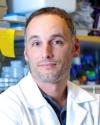
John Poirier, PhD
John Poirier, PhD
Memorial Sloan Kettering Cancer Center, New York, NY
Molecular mechanisms of acquired drug resistance in small cell lung cancer

Small cell lung cancer is an exceptionally aggressive type of lung cancer. While these tumors are initially responsive to a combination of chemotherapy drugs, tumor recurrence is near universal. Dr. Poirier will develop and study models of drug resistance to identify new strategies to overcome chemotherapy resistance.


Early Detection Research Award

Zeynep H. Gümüş, PhD
Icahn School of Medicine at Mount Sinai, New York, NY
Steven M. Lipkin, MD, PhD
Joan & Sanford I. Weill Medical College of Cornell University, New York, NY
Kenneth Offit, MD, MPH
Memorial Sloan Kettering Cancer Center, New York, NY
Identifying germline risk mutations for early-onset and familial NSCLC

Each year, more than 22,000 people who have never smoked are diagnosed with lung cancer, many at younger ages. Dr. Gümüş and team will identify underlying genes that could indicate a higher risk of developing lung cancer, similar to what has been found with certain forms of breast, colorectal, and pancreatic cancers. People who carry the high-risk genes could then be monitored more carefully.


Abhijit Patel, MD, PhD
Yale University, New Haven, CT
Detection of early-stage lung cancers via tumor DNA in blood

With the goal of a simple blood test that permits early detection of lung cancer, Dr. Patel will test a new technology to see if it can accurately identify lung cancer-specific telltale changes in the blood of patients with early-stage lung cancer.


Kimberly M. Rieger-Christ, PhD
Lahey Hospital & Medical Center, Burlington, MA
Jacob Sands, MD
Lahey Hospital & Medical Center, Burlington, MA
Katrina Steiling, MD, MSc
Boston University, Boston, MA
Nasal biomarkers for the evaluation of lung nodules found by LDCT screening

Dr. Rieger-Christ and team are developing a minimally invasive test using nasal swabs to determine quickly and easily whether nodules found through CT screening are early cancer or benign lesions.


Targeted Therapeutics Research Award

Alberto Chiappori, MD
H. Lee Moffitt Cancer Center & Research Institute, Tampa, FL
Scott Antonia, MD, PhD
H. Lee Moffitt Cancer Center & Research Institute, Tampa, FL
Antagonism of adenosine A2A receptor to improve lung cancer immunotherapy

Cancer cells have found ways to block the body’s own immune system from helping to destroy the tumor. However, newly developed drugs can make the patient’s own immune system more efficient. This team will administer two different immunotherapy drugs to lung cancer patients and determine whether the addition of another drug, PFB-509, can improve the anti-tumor effects and patient outcomes.


LUNGevity Foundation, in partnership with the Melanoma Research Alliance and the Lung Cancer Research Foundation, is co-funding research on PD-I inhibitor treatment options for both non-small cell lung cancer (NSCLC) and metastatic melanoma (MM) patients

Lucia Beatrice Jilaveanu, MD, PhD
Yale University, New Haven, CT
Response to PD-1 inhibitors in lung cancer and melanoma patients with brain metastases

Brain metastases are extremely common in both NSCLC and melanoma patients. Two new immunity-boosting drugs are showing promise against both of these kinds of cancer. However, whether these drugs work on cancer cells that metastasize and lodge in the brain is not known. Dr. Jilaveanu will study patients with brain metastases treated with the new drugs to find biomarkers that could predict the patients’ response to this treatment.


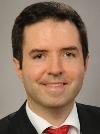
Julien Sage, PhD
Julien Sage, PhD
Stanford University, Stanford, CA
Irving Weissman, MD
Stanford University, Stanford, CA
Activating phagocytosis to inhibit small cell lung carcinoma

Drs. Sage and Weissman will test a new immunotherapy to boost the arsenal of immune cells to combat SCLC. They will work to disable a protein on the cancer cells that inhibits macrophages, a type of immune cell that can engulf and destroy cancer cells. This will boost the killing capacity of macrophages and recruit more immune cells to the area by the tumor.


This grant was funded in part by Upstage Lung Cancer.

Alejandro Sweet-Cordero, MD
Stanford University, Stanford, CA
Jennifer Cochran, PhD
Stanford University, Stanford, CA
Protein engineering to target tumor-stroma interactions in NSCLC

Lung cancer cells depend on continuous cross-talk with other cells around them. Drs. Sweet-Cordero and Cochran will use decoy proteins to intercept and disable this essential molecular communications between the tumor and its environment, thereby destroying the cancer.


Career Development Award

Timothy F. Burns, MD, PhD
University of Pittsburgh Cancer Institute, Pittsburgh, PA
Targeting KRAS-mutant NSCLC through inhibition of MTOR and Hsp90

Dr. Burns is working on targeted therapy for NSCLC patients with mutations in a gene called KRAS, using a new class of drugs.


David E. Kozono, MD, PhD
Dana-Farber Cancer Institute, Boston, MA
Biomarkers for NSCLC radiosensitization by proteasome inhibition

Dr. Kozono is studying which genetic types of lung cancer are the most resistant to radiation, and which of these may be best treated with a combination of radiation and bortezomib, a drug already FDA-approved for another type of cancer.


Meredith Tennis, PhD
University of Colorado Denver, Denver, CO
Biomarkers for targeted lung cancer chemoprevention

Dr. Tennis aims to identify biomarkers that signal whether a patient is likely to benefit from iloprost and pioglitazone, two drugs that have demonstrated promise in reducing NSCLC risk, and determine whether they work in a clinical trial setting.


Early Detection Research Award

This grant was funded in part by Upstage Lung Cancer.

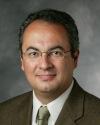
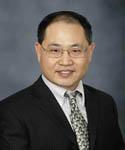
Feng Jiang, MD, PhD
Feng Jiang, MD, PhD
University of Maryland, Baltimore, MD
Sanford Stass, MD
University of Maryland, Baltimore, MD
Sputum biomarkers for the early detection of lung cancer

Dr. Jiang is identifying sputum biomarkers that could improve the process of detecting early-stage lung cancer by contributing to development of a non-invasive test that complements low-dose computed tomography (CT) scans and improves the accuracy of diagnosis.