Read time: 1 minute. For more than two decades, LUNGevity Foundation has been a leader in advancing lung cancer research. Since 2002, we have invested $55+ million in more than 200
Read time: 5 minutes. Lung cancer research was in the spotlight at the European Society for Medical Oncology (ESMO) meeting held October 17-21, 2025, in Berlin, Germany. With
Read time: 6 minutes. LUNGevity Foundation announced $1.2 million in research awards that are designed to strengthen the lung cancer workforce and accelerate progress across the
Read time: 3 minutes. Immune checkpoint inhibitors (ICIs) have revolutionized the way we approach lung cancer treatment over the past decade. These lifesaving drugs block the PD-L1
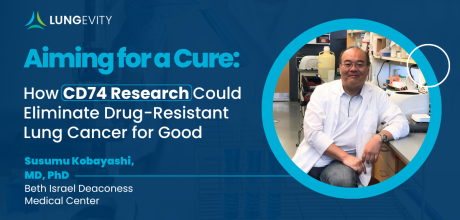
Read time: 4 minutes. Lung cancer remains the leading cause of cancer death worldwide. Over the past two decades, the development of targeted therapies, particularly tyrosine
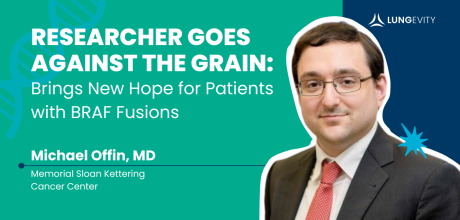
Read time: 4 minutes. BRAF is an important signaling protein that regulates how normal cells grow and multiply through the MAPK (mitogen activated protein kinase) signaling pathway
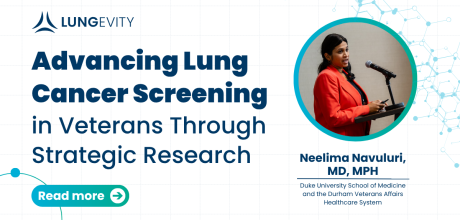
Read time: 4 minutes. Lung cancer screening has the potential to save more lives than any other cancer screening tool, yet reports suggest only 10%–20% of eligible patients are
Read time: 5 minutes. Lung cancer screening has come a long way since low-dose CT (LDCT) scans first became available in 2015 in the United States. However, LDCTs can still miss
Read time: 3 minutes. For people with advanced or metastatic non-small cell lung cancer (NSCLC), the treatment landscape has changed dramatically in recent years. Researchers are
Read time: 2 minutes. The annual World Conference on Lung Cancer (WCLC), organized by the International Association for the Study of Lung Cancer, is the largest global meeting
Read time: 3 minutes. Small cell lung cancer (SCLC) research continues to progress at an unprecedented rate. Exciting news emerged from the 2025 World Congress on Lung Cancer, with
Read time: 2 minutes. The likelihood of surviving five years or more after a lung cancer diagnosis is 27%. 1 But if it is caught early, before spreading, the five-year survival